dishwasherrepairknoxville.com

How to Troubleshoot a Dishwasher Not Draining at Home (Step-by-Step Guide for Knoxville Homeowners)
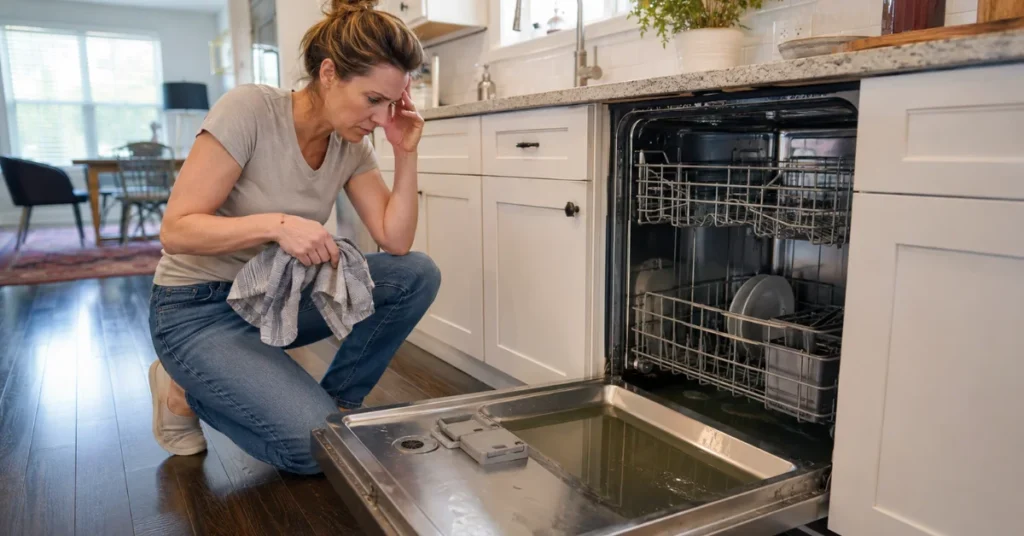
Knoxville homeowner looking at standing water inside dishwasher that is not draining.

You open the dishwasher and notice stagnant dirty water collected at the bottom that isn’t draining away.


A bad smell hits. The dishes stay dirty. You still do not know the cause.


Here is the good news. Most of the time, a dishwasher not draining at home is not a serious problem. It is usually a clog somewhere in the drain system, and you can track it down yourself in under an hour.


The five most common reasons a dishwasher will not drain:

  • A filter that is blocked or full of debris
  • A drain hose that is bent, clogged, or restricted
  • Garbage disposal connection issue
  • Debris is stuck in the drain pump area.
  • Faulty control board or electrical failure


In Knoxville, there is one more factor most guides skip over. The water here is moderately hard. Mineral buildup quietly collects inside the filter and pump area over time, making clogs happen faster than they would in areas with softer water.


Follow these steps one by one. In many cases, the issue gets resolved before you even get to the fourth step.

Why Your Dishwasher Is Not Draining (Quick Answer)

Your dishwasher uses a drain pump to push water out through a hose that connects to either your sink drain or garbage disposal. When any part of that path gets blocked or breaks down, water has nowhere to go and collects at the bottom of the tub.

The most frequent cause of drainage problems is a blocked or dirty filter. Over time, food particles, grease, and debris build up so thick that water simply cannot pass through.

After the filter, the next usual suspects are the drain hose and the garbage disposal connection. Electrical problems like a failed control board are less common but do happen, and those require a professional.

Step-by-Step Troubleshooting Guide (Start Here First)
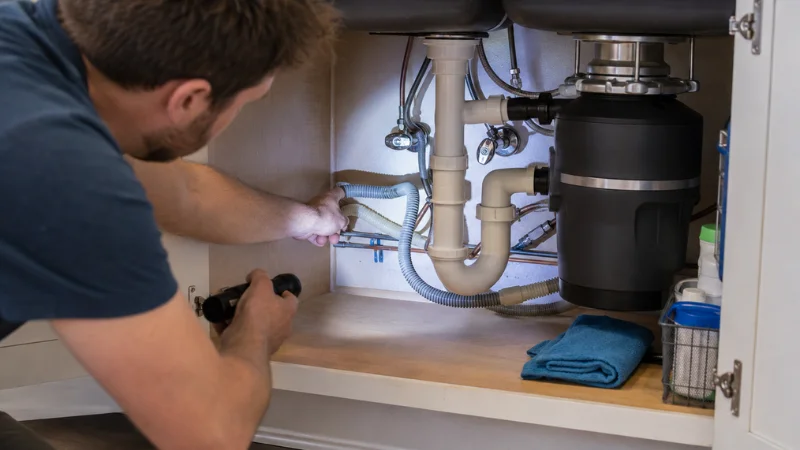
check dishwasher drain hose for clog
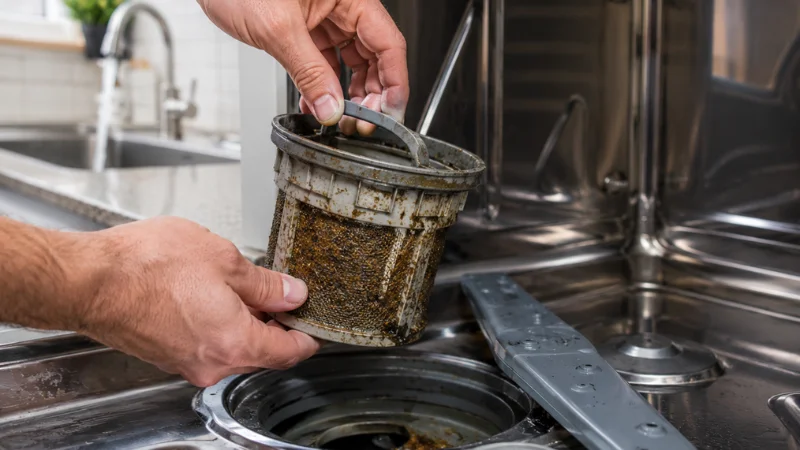
cleaning dishwasher filter to fix not draining issue at home

Go through each step before moving to the next. Do not skip ahead.

1

Turn Off Power and Remove Standing Water

Always disconnect the power before touching the dishwasher. Unplug it or shut off the breaker.

Start by removing any standing water with a cup or ladle, and place old towels around the base to soak up any spills. You need the inside to be dry enough to see what you are dealing with.

Never skip this step — working on a powered dishwasher is dangerous.

2

Clean the Dishwasher Filter (Most Common Fix)

This solves the problem for most people. Start here.

The filter sits at the bottom of the dishwasher tub, usually beneath the lower spray arm. Most filters twist counterclockwise to unlock and lift out. Rinse under hot water and use a soft brush to remove food particles.

Hold it up to the light. If you can barely see through it, that was your problem.

In Knoxville, hard water leaves a white mineral film on the filter mesh on top of the usual food debris. A soft brush with a little dish soap clears both. Once it is clean, lock it back in flat and run a short rinse cycle to test drainage.

💡 Pro tip: If you are doing this for the first time in months, do not be surprised by what comes out. Clean it monthly going forward, and this step becomes a two-minute job.
3

Check and Clear the Drain Hose

If the filter is already clean, or cleaning it does not solve the issue, proceed to check the drain hose. The drain hose runs from the back of the dishwasher to either your garbage disposal or the sink drain under the counter.

Check in the under-sink cabinet to see if the hose is kinked. Straighten any kinks by hand. Then check if water flows through it freely. To inspect for a blockage, detach the hose from the pump and try blowing air through it. If air will not pass through, you have a clog.

If there is a blockage, use a bottle brush to clear it, then flush with water before reconnecting. Once a hose kinks repeatedly in the same spot, replacing it is smarter than straightening it again. Drain hose replacements cost between $50 and $100.

4

Inspect the Garbage Disposal Connection

If you have a garbage disposal under the sink, this is worth checking even if the disposal seems fine.

If the dishwasher or garbage disposal is newly installed, make sure the knockout plug has been taken out. This small plastic plug must be punched out for the dishwasher drain to connect properly. It is one of the most overlooked installation mistakes, and it completely blocks drainage.

Even if the installation is old, run the disposal for 30 seconds with cold water before running the dishwasher. Food sludge in the disposal can back up water into the dishwasher tub.

5

Clean the Drain Pump Area

The drain pump is what physically pushes water out of the machine. It sits at the bottom of the tub, usually accessible once the filter is removed.

Use a flashlight to inspect inside the pump opening. You are looking for food chunks, broken glass, labels, or anything that should not be there. Carefully take out any debris you can see using your hand or a small tool, but avoid applying force.

A properly functioning drain pump produces a consistent humming noise while the dishwasher is draining. If you hear grinding, buzzing, or nothing at all, the pump itself may be failing.

6

Check the Drain Impeller

The impeller is a small, plastic, fan-like part inside the pump that rotates to move water through the drain hose. If it breaks or cracks, the pump motor may still run, but water will not move.

If you hear humming, clicking, or notice that the dishwasher is unusually quiet during the drain cycle, it could suggest an issue with the drain pump or its motor. Accessing the impeller requires partially disassembling the pump.

⚠️ This is the point where most homeowners hand things over to a technician. Pump disassembly without experience can make things worse.
7

Check Electrical Components (Advanced)

If every physical component looks clear and clean, but the dishwasher still will not drain, the problem is likely electrical.

The control board tells the drain pump when to run. If it is faulty, the pump simply does not receive the signal to start, even if the pump itself is perfectly fine. Repairing or replacing the control board typically costs between $200 and $600.

Another component to consider is the drain valve solenoid, which regulates the flow of water exiting the dishwasher. A failed solenoid will stop drainage even when everything else is working.

⚠️ At this point, do not guess. Call a licensed technician in Knoxville. Trying to troubleshoot electrical issues without the right tools can result in incorrect diagnosis and possible safety hazards.

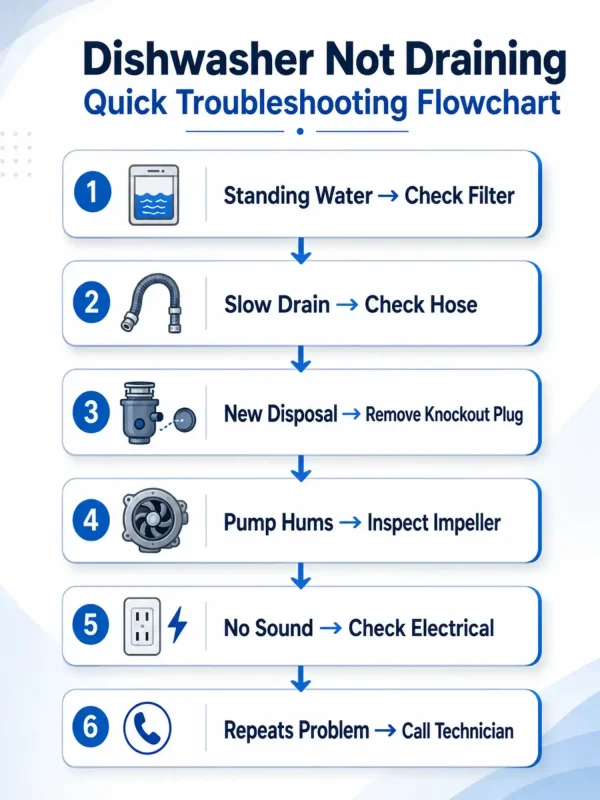
Quick Troubleshooting Flowchart

Dishwasher Not Draining – Quick Troubleshooting Flowchart

Use this as a fast reference before diving into each step.

What You See Check This First
Standing water after every cycle Start with the filter
Water drains slowly Check hose for partial kink or clog
New disposal installed recently Check if the knockout plug has been removed
Pump hums but no drainage Inspect drain impeller
Pump makes no sound at all Control board or solenoid
Problem keeps coming back Call a professional

Dishwasher drain repair cost guide Knoxville, Tennessee 2026

Most drainage issues do not appear overnight. They build up because of habits that slowly damage the system.

Not Cleaning the Filter Regularly

For optimal performance, clean your dishwasher filter at least once a month, or more frequently if you notice dishes are not getting clean. Skipping this for months turns a two-minute job into a repair call.

Overloading the Dishwasher

Stacking dishes too tightly blocks the spray arms and sends more food debris toward the filter and drain. Overloading also strains the pump motor over time.

Using the Wrong Detergent

Regular dish soap creates thick foam that can clog the drain system. Always use detergent made specifically for dishwashers and follow the recommended amount. Too much detergent causes soap buildup that restricts water flow just as much as food debris.

Skipping the Garbage Disposal

If your dishwasher connects to a disposal, run it before every cycle. Leftover food in the disposal backs up into the drain hose and causes drainage issues that look like dishwasher problems.

When to Call a Professional in Knoxville, TN

DIY troubleshooting covers the most common drain issues. But some problems genuinely need a trained technician. Knowing when to stop saves you time and prevents accidental damage.


Call a licensed Knoxville appliance repair service when:

  • The drain pump is making grinding or humming noises, but not draining.
  • You have cleaned everything, and the problem still comes back within a week.
  • There are electrical symptoms like error codes, unresponsive controls, or burning smells.
  • The machine has not drained at all across multiple cycles despite your troubleshooting.
  • The pump impeller or motor needs replacement.

A humming, clicking, or unusually quiet dishwasher during the drain cycle may indicate an issue with the drain pump or motor. If the machine does not sound like it normally does, it may be time to make a service request.


Local Knoxville services covering Knox County, Farragut, Oak Ridge, and Maryville include Mr. Appliance of Knoxville  and Complete Appliance Repair, both of which offer same-day or next-day scheduling for drain-related issues.

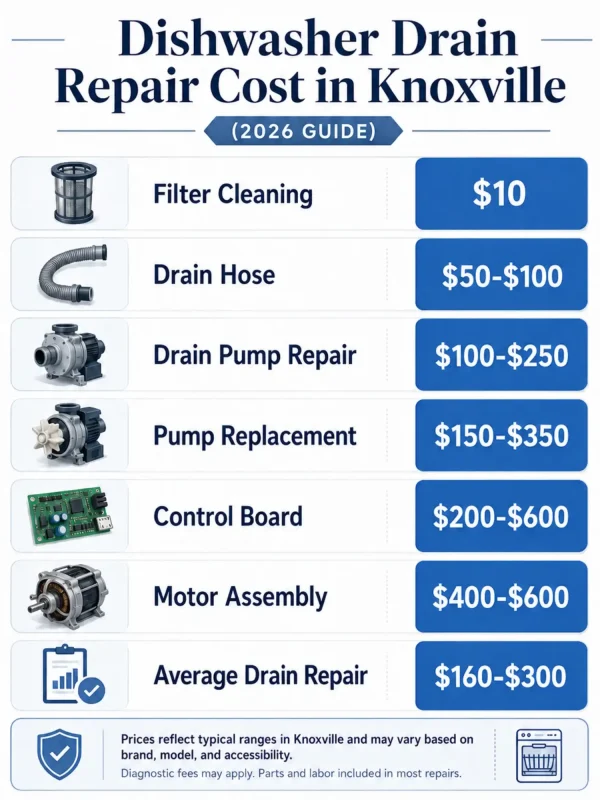
Dishwasher Repair Cost in Knoxville (2026 Guide)
dishwasher drain repair cost guide Knoxville, Tennessee 2026

Before contacting anyone, understand a fair price range so you’re not surprised or overcharged.

Repair Type Estimated Cost
Filter cleaning (DIY) $0
Drain hose replacement $50 to $100
Drain pump repair $100 to $250
Drain pump full replacement $150 to $350
Control board repair $200 to $600
Motor and pump assembly $400 to $600
Standard drainage repair (avg) $160 to $300

Most homeowners pay between $160 and $300 for common dishwasher repairs, including drain-related fixes. Diagnostic fees of $50 to $100 are standard and are usually credited toward the repair if you go ahead with the work.

For pump issues specifically, hiring a professional to diagnose and replace a dishwasher drain pump typically runs between $150 and $350, depending on the brand and model.

DIY vs Professional Repair: What Should You Choose?

Not all drainage problems require a professional technician. But not every drain issue should be handled alone, either.

Go DIY if:

  • The filter was visibly dirty, and cleaning it fixed the drainage.
  • The drain hose had a simple kink that you straightened.
  • The garbage disposal knockout plug was still in place after a new installation.
  • The issue was resolved after running the disposal and doing a reset cycle.


Call a professional if:

  • The pump is making abnormal sounds or not making any sound.
  • You replaced a part, and the problem came back.
  • The control panel may display error codes.
  • The issue involves wiring, solenoids, or the control board.
  • If the dishwasher is over 8–10 years old and has needed frequent repairs, it may be reaching the end of its reliable lifespan.

If your dishwasher is less than 10 years old and the repair cost is less than half the replacement cost, repair is typically worthwhile. For older machines with recurring drain problems, a replacement conversation with a technician makes sense.

How to Prevent Dishwasher Drain Problems

Once you fix the current issue, a few simple habits will stop it from coming back.

Clean the Filter Monthly

Remove it, rinse it clean, then reinstall it — it only takes a couple of minutes.

Scrape Plates Before Loading

Pre-rinsing isn't necessary, but any large food scraps should be discarded instead of left in the filter.

Run the Disposal Before Every Cycle

This clears the shared drain path and prevents backflow.

Use the Right Detergent Amount

Excess soap creates buildup that clogs internal components over time.

Run a Monthly Cleaning Cycle

Put a cup of white vinegar upright on the bottom rack, then run a hot wash cycle. This dissolves mineral deposits that Knoxville's hard water leaves behind inside the pump and hoses.

Check the Drain Hose Yearly

Check for any bends, damage, or blockages. Catching a worn hose early costs far less than a flooded cabinet.

Frequently Asked Questions

Conclusion

A dishwasher that isn’t draining can be annoying, but it usually doesn’t mean the appliance is beyond repair.

Start with the filter. That single step solves the problem for the majority of Knoxville homeowners. If not, work through the drain hose, the garbage disposal connection, and the pump area in that order.

The key is not to skip steps or guess. A wrong diagnosis means replacing a part that was never the issue.

If you have worked through every step and the machine still will not drain, or if the pump is making strange noises, stop there and call a licensed local technician. Electrical and pump failures need proper tools and experience to fix safely.

Leave a Reply

Your email address will not be published. Required fields are marked *